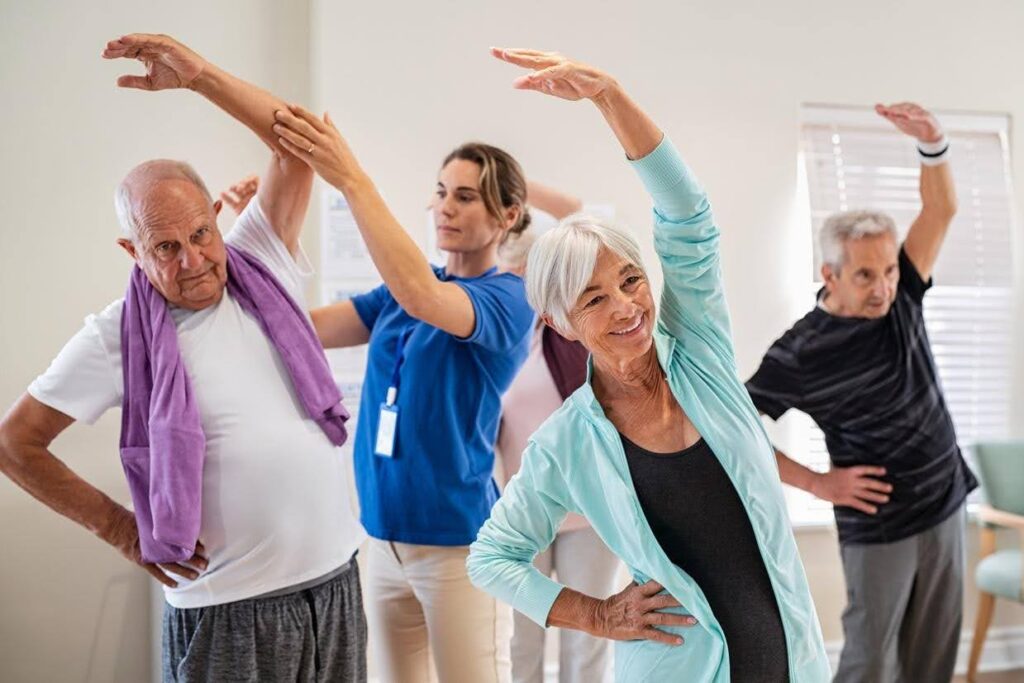
Staying active can become more difficult with age, especially when mobility changes, health concerns, or a lack of motivation make regular exercise harder to maintain. At the same time, many older adults experience fewer opportunities for everyday social interaction after retirement, the loss of a spouse, or changes in their ability to drive. Group exercise can address both needs by providing structured movement in an environment where seniors can see familiar faces and participate alongside others. The combination of physical activity and social connection can make staying active feel more enjoyable and less like another health-related obligation.
Exercise does not need to be strenuous to have value for older adults, and the appropriate type and intensity will depend on each person’s health and abilities. Gentle movement, balance activities, stretching, walking, and modified dance-based programs can all create opportunities to remain active. When these activities take place in a group, the social experience can become an important reason to keep participating. For some seniors, looking forward to seeing other people is just as motivating as the exercise itself.
Regular Movement Helps Maintain Everyday Abilities
Physical activity supports many of the abilities seniors rely on throughout an ordinary day. Strength, balance, flexibility, and endurance contribute to activities such as getting out of a chair, walking through the home, carrying light items, and safely navigating stairs. When activity levels decrease, these abilities may gradually become harder to maintain. Regular movement can therefore support independence in ways that extend beyond the exercise session itself.
Professionals involved in aging care services often encourage appropriate physical activity as one part of a broader approach to healthy aging. The goal is not athletic performance but helping older adults continue using their bodies safely and regularly. Activities should be adapted when pain, mobility limitations, or health conditions affect participation. Seniors with medical concerns should discuss appropriate exercise with their healthcare provider before beginning a new program.
Exercising With Others Can Improve Motivation
Starting an activity alone can be difficult, especially for someone who has not exercised regularly in years. Group settings provide structure because sessions happen at a specific time and participants know other people will be there. Seeing peers participate at different ability levels can also make movement feel more approachable. This sense of shared experience may encourage seniors to return consistently.
A home care agency in Illinois can support an older adult’s overall routine when practical barriers make participation difficult. For example, getting dressed, preparing for the day, or maintaining a consistent schedule may become harder even when the senior wants to remain active. Addressing these barriers can make participation in appropriate community activities more realistic. Sometimes the challenge is not motivation to exercise but everything required before leaving the house.
Group Activities Create Natural Opportunities for Friendship
Social connection does not always need to begin with a formal conversation or planned social event. Group movement gives participants something to do together, which can make interaction feel more natural. A simple greeting before class may gradually become a regular conversation, and familiar faces can develop into meaningful friendships. These small connections can become especially important for seniors who spend much of their time alone.
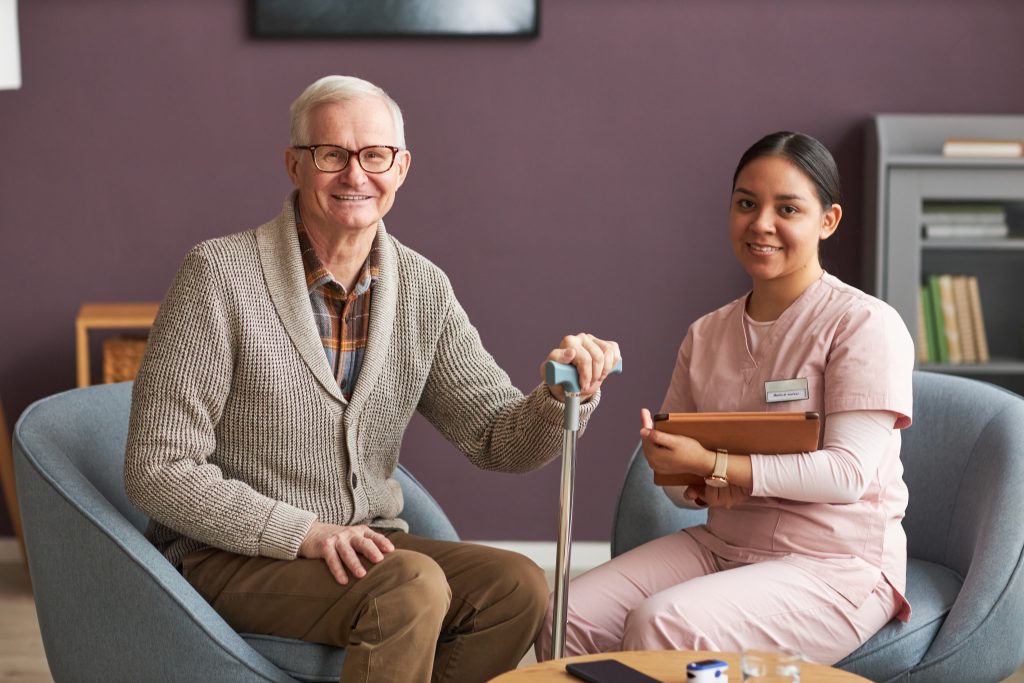
Professional Elderly companion care services can complement these social opportunities by helping older adults maintain engagement between community activities. A caregiver might encourage participation in hobbies, conversation, walks, or other enjoyable routines based on the person’s preferences. Social connection is not about keeping someone constantly busy but ensuring there are meaningful opportunities to interact. Regular engagement can make everyday life feel more connected.
Modified Exercise Can Make Participation More Comfortable
Not every senior can safely follow the same movements or maintain the same pace. Arthritis, balance concerns, joint replacements, heart conditions, or limited endurance may require exercises to be modified. Chair-based movements, shorter sessions, slower pacing, and additional breaks can make activities more accessible. A good program recognizes differences in ability rather than expecting every participant to perform identically.
Through personal care services in Illinois, older adults can receive assistance with daily routines that may otherwise make physical activity more difficult. Support with dressing, grooming, mobility, or preparation for activities can help conserve energy for things the senior actually wants to do. Care should encourage participation without pushing someone beyond safe limits. Respecting individual abilities helps exercise remain a positive experience.
Know What to Consider Before Joining a Group Program
Families may feel encouraged when a parent expresses interest in becoming more active, but choosing an appropriate program still requires some thought. A class should match the senior’s current abilities rather than the level of activity they managed years ago. Families should also consider accessibility, supervision, pacing, and whether modifications are available. The best program is one a senior can participate in safely and enjoy enough to continue attending.
Before getting started, consider:
- Whether the senior’s healthcare provider recommends any activity restrictions
- Whether exercises can be modified for mobility or balance limitations
- Whether chairs or other supports are available when needed
- Whether the instructor has experience working with older adults
- Whether the environment is comfortable and easy to navigate
- Whether the senior actually enjoys the type of activity being offered
These considerations help families focus on sustainability rather than intensity. Exercise should support health without creating unnecessary pressure or fear. When seniors feel comfortable with the environment and activity, they are more likely to remain involved over time.
Dance-Based Movement Can Make Exercise Feel Enjoyable
Traditional workouts do not appeal to everyone, and older adults are no different. Music and dance-inspired movement can make physical activity feel more like recreation than a formal fitness routine. Familiar songs may encourage participation, while rhythmic movements can create opportunities to work on coordination and mobility in an enjoyable setting. The group atmosphere can also add energy that is difficult to recreate when exercising alone.
A Senior Zumba Program Services across Illinois can provide residents with a structured opportunity to combine appropriate movement, music, and social interaction. Programs for older adults should consider different mobility levels and provide modifications when necessary. The social atmosphere can be particularly valuable in senior communities where residents benefit from regular opportunities to gather. Enjoyment can be an important part of building a sustainable activity routine.
Personal Support Can Make Staying Active Easier
Sometimes an older adult wants to participate in exercise but struggles with the routines surrounding it. Difficulty bathing, dressing, choosing appropriate clothing, or safely moving around the home can use up energy before an activity even begins. Families may mistakenly believe their parent has lost interest when the real obstacle is physical preparation. Asking what part of the process feels difficult can reveal where assistance would be most useful.
With personal care services in Illinois, seniors can receive respectful help with everyday routines while continuing to make their own choices and participate where they are able. The purpose of assistance is not to make someone dependent but to reduce barriers that interfere with meaningful activities. Preserving energy for exercise, friendships, hobbies, and family time can improve the overall quality of the day. Personalized support allows care to fit around the life a senior wants to maintain.
Supporting an Active and Connected Life
Healthy aging involves more than completing exercises or reaching a certain number of steps each day. Physical activity becomes more meaningful when it supports the ability to participate in family life, maintain friendships, enjoy hobbies, and continue doing familiar tasks. Group programs can provide both movement and connection, but each senior’s interests, abilities, and health needs should guide the choice of activity. A sustainable routine is one that feels safe, enjoyable, and personally worthwhile.
At Ace Home Care, ace home care services can support older adults with everyday routines that help them remain engaged in the activities and relationships that matter to them. Families exploring home care services in Illinois can consider personalized assistance alongside appropriate community exercise and social opportunities, creating a broader support system around their loved one. Starting with small, enjoyable activities can often be more effective than expecting major lifestyle changes all at once. If you’re noticing these signs, it may be time to explore professional support. Learn more about our home care services in Illinois or reach out for guidance.